Learning Design at the Intersection of Pedagogy and Technology


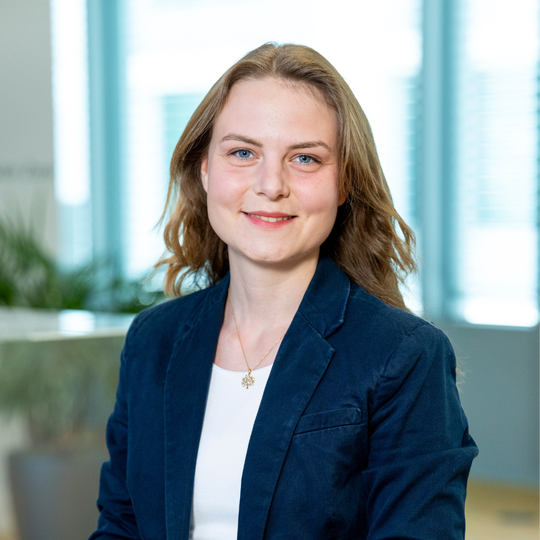
From my experience of e-learning courses, I have found that the main weakness of digital courses is rarely the technology itself. Instead, it is usually because they focus on content rather than learning objectives. I have made this observation ever since. Learning only works when the learners' needs are truly at the centre, rather than the subject matter or the tool.
Who am I?


My path leads from social and organisational pedagogy to educational technology, combining pedagogical perspectives with digital know-how and user-centred research. I translate complex requirements into well-considered, implementable solutions that are evidence-based, learning theory-informed and with a clear view of different perspectives. I understand didactic principles not as a rigid concept, but as a design task: as a process that provides orientation and simultaneously opens up possibilities.

Education

2022-2025
Saarland University
Master of Science (M.Sc.), Educational Technology
2023-2023
University of Agder
Study Abroad, Multimedia and Educational Technology
2017-2022
Trier University
Bachelor of Arts (B.A.), Social and Organisational Education
2008-2016
High School Marienschule Saarbrücken
University Entrance Qualification

My Experiences

With a strong foundation in education, digital design, and user-centered research, I have contributed to projects ranging from interactive learning environments to AI-based feedback systems. Whether in small creative teams or larger organizations, I focus on transforming complex educational challenges into clear, thoughtful solutions that make learning more accessible, engaging, and meaningful.

💻 Software Skills
  • Office software – advanced proficiency
  • Figma – proficient in interface design and prototyping
  • Articulate 360 – proficient in creating interactive learning modules
  • Canva – proficient in visual learning material design
  • Python – basic knowledge

🌍 Language Skills
  • German – native speaker
  • English – C1
  • French – B2
  • Norwegian – A1

My Projects

UDSustainable

Achieving sustainability on campus can be challenging, especially for international students who are often unfamiliar with the German waste separation system. A user study revealed that they are not well-versed in the subject and that existing information is typically only available in German, making it difficult to access. Saarland University aims to promote sustainable behavior among students and employees. As a research and innovation hub, the university has a particular social responsibility. Therefore, an interactive prototype was developed based on the existing campus app, which is known for its canteen plan, among other features. This new prototype integrates sustainability content. Implemented with Figma, it shows how tips on recycling or bicycle use can be integrated in an easily accessible, user-friendly way.

Open Project

Replication Crisis

This learning unit, developed as part of a group project, introduces learners to the replication crisis in empirical research through interactive content. It demonstrates why replicability is essential to the validity of scientific results and how research decisions can affect their quality.

Based on Gagné’s “Nine Events of Instruction” and Schank’s “Goal-Based Scenario,” the didactic design uses structured learning scenarios with knowledge transfer, practice phases, and feedback to create an interactive, practice-oriented learning environment. The unit was developed with Articulate Storyline 360 to provide an engaging, accessible learning experience.

It helps learners recognize problematic research practices and apply principles such as transparency and replicability to their work. The unit is intended for beginners and experienced researchers alike and can be adapted to different levels of prior knowledge.

Open Project

Open Educational Ressources

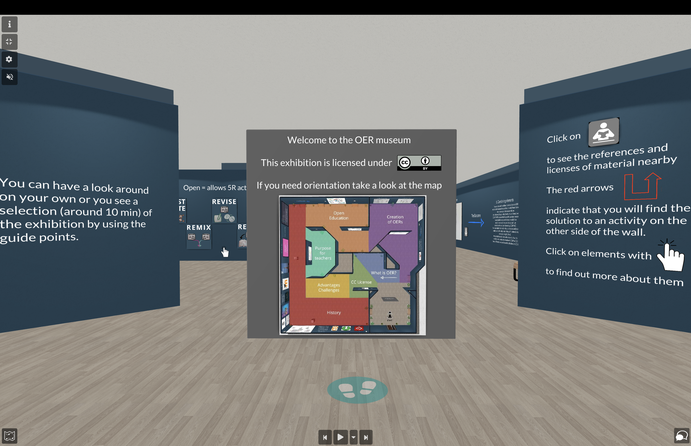
The topic of Open Educational Resources (OER) was presented in the form of a digital museum, but in a way that was deliberately different from traditional exhibitions. We’ve all experienced it: endless walls of text and overloaded panels, which quickly lose the interest of visitors and have little educational value.

This is precisely where this museum comes in: not only is it digital and therefore much more accessible, it is also interactive. Visitors can get involved, make assessments, guess and discover things for themselves. This creates a learning experience that arouses curiosity, engages the visitor and leaves a lasting impression.

Open Project

iTea - Intelligenter Tee-Assistent

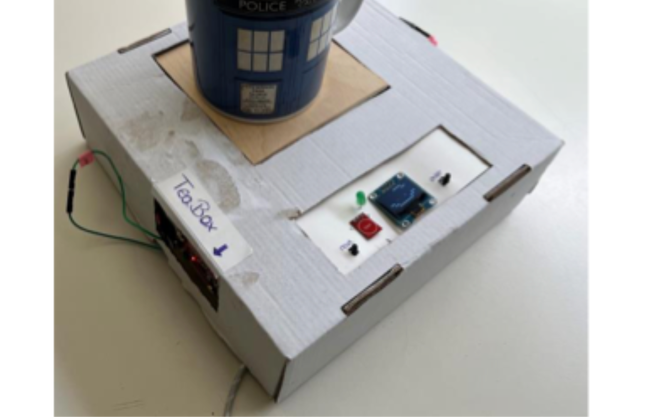
Tea is one of the world’s most popular drinks, enjoyed for its pleasure and as a ritual of mindfulness. However, preparing tea correctly requires precision; temperature, brewing time, and quantity significantly impact taste and effect. To simplify this process, we developed ITea, a smart assistant that helps you brew the perfect cup of tea every time.

Using an NFC card, the device recognizes the type of tea and provides clear instructions, automatically starting the appropriate timer. As soon as the tea is ready to drink, it signals you — without the need for additional aids or the hygiene issues associated with fully automatic machines. This keeps the preparation process simple, personalized, and under your control.

The project was developed as part of the computer science course “Interactive Systems” and combines user-centered design with technical implementation.

Open Protocol